
If you are still doing the work because “it’s faster if I just do it myself,” you do not have a workload problem. You have a delegation problem—and the longer you keep every task, decision, and process in your hands, the harder it becomes to grow without becoming the bottleneck. This guide will show you how to delegate as a founder without lowering your standards, losing visibility, or constantly taking work back. You will learn what to delegate first, how to build an SOP that someone can actually follow, and how to stop delegated work from coming back to you.
Why Founders Struggle to Delegate
Most founders already know they should delegate. The problem is that knowing you should delegate and knowing how to delegate effectively are two very different things. Three thoughts usually get in the way.
Mindset Trap 1: “It’s Faster If I Do It Myself”
In the short term, this can be true. You already know the task. You do not need to explain it. You do not need to review someone else's work. You can finish it in ten minutes instead of spending thirty minutes teaching someone.
But this creates a hidden cost. Every time you choose speed today over knowledge transfer, you make yourself responsible for the same task tomorrow. Eventually, you are spending hours doing work that someone else could have learned to handle months ago.
Mindset Trap 2: “They Won’t Do It as Well as I Do”
A new person will probably not perform the task exactly like you on day one. They need context, practice, feedback, and a clear standard. The mistake is expecting someone to perform like an experienced founder without giving them the system that created the founder's experience.
Instead of lowering the standard, raise the clarity.
Show people what good looks like. Explain why the standard matters. Give them a process to follow and enough practice to build judgment.
Mindset Trap 3: “Nobody Understands the Business Like I Do”
Your founder experience is valuable. But if the only way to access that knowledge is through you, it becomes a business dependency.
The goal of the founder delegation is not to make everyone understand the business exactly as you do. It is to transfer enough of your knowledge, standards, and decision rules so other people can make good decisions without constantly needing you.
“If the only reason you still own a task is that nobody else knows how to do it, you have a knowledge-transfer problem.”
That is a systems problem, not a permanent founder requirement.
What Should a Founder Delegate First?
Before you start handing tasks to your team, categorize your work. Not everything should be delegated. Some things genuinely require the founder. Other things should never have been on your plate in the first place.
Use this five-category framework:
| Question | Action |
|---|---|
| Only I can do this | Keep |
| Someone can learn it | Delegate |
| A system can handle it | Systemize |
| AI can handle it | Automate |
| Nobody needs it | Eliminate |
This prevents a common delegation mistake: giving away random tasks simply because you are busy.
Keep: Founder-Level Work
Keep work that genuinely requires your unique judgment, authority, relationships, or strategic responsibility.
This might include:
- Major strategic decisions
- Key partnerships
- Important financial decisions
- High-level positioning
- Founder-level relationships
- Long-term business direction
The list should be smaller than most founders think.
Delegate: Work Someone Can Learn
These are tasks that require a person but do not require you.
Examples include:
- Customer follow-up
- Scheduling
- Routine reporting
- Team coordination
- Standard sales follow-up
- Supplier communication
- Content production
- Routine customer service
If someone can learn the task with training and a clear standard, it is a candidate for delegation.
Systemize: Repeated Work That Needs Consistency
Some work should not simply be handed to another person. It first needs a repeatable process.
For example, if every new hire needs to be trained on the same onboarding process, create the onboarding SOP before expecting someone else to own it.
Systemization creates consistency.
Automate: Repetitive Work That Does Not Need Judgment
Automation is useful when the task follows predictable rules.

Examples might include:
- Sending reminders
- Moving information between systems
- Generating routine reports
- Scheduling standard communications
- Organizing repetitive data
But automation should not be your first response to a messy process.
“Fix the process first. Then automate it.”
If you are struggling to delegate effectively, the problem may not be your team’s willingness or ability to help. Without clear ownership, practical systems, and the right structure, delegation can create more confusion instead of reducing the number of decisions that still come back to you.
The next step is to make the business easier to operate by giving yourself practical frameworks you can use to clarify responsibilities, strengthen ownership, and create more structure around the way work gets done.
UNLOCK CLARITY AND DELEGATION WITH STARTUP TOOLKIT →The Kim Vu Journey Startup Toolkit gives you practical resources and frameworks to help bring more clarity and structure into your business. Explore the tools and start building systems that support better delegation, reduce daily operational pressure, and give you more space to focus on the bigger picture.
How to Delegate a Task Step by Step
Step 1: Explain the Outcome
Start with the result. Do not begin with twenty instructions. First explain what “done” looks like.
For example:
“By Friday, every new customer should receive the welcome sequence, have their account set up, and know who to contact for support.”
That gives the person a destination.
Step 2: Document the Process
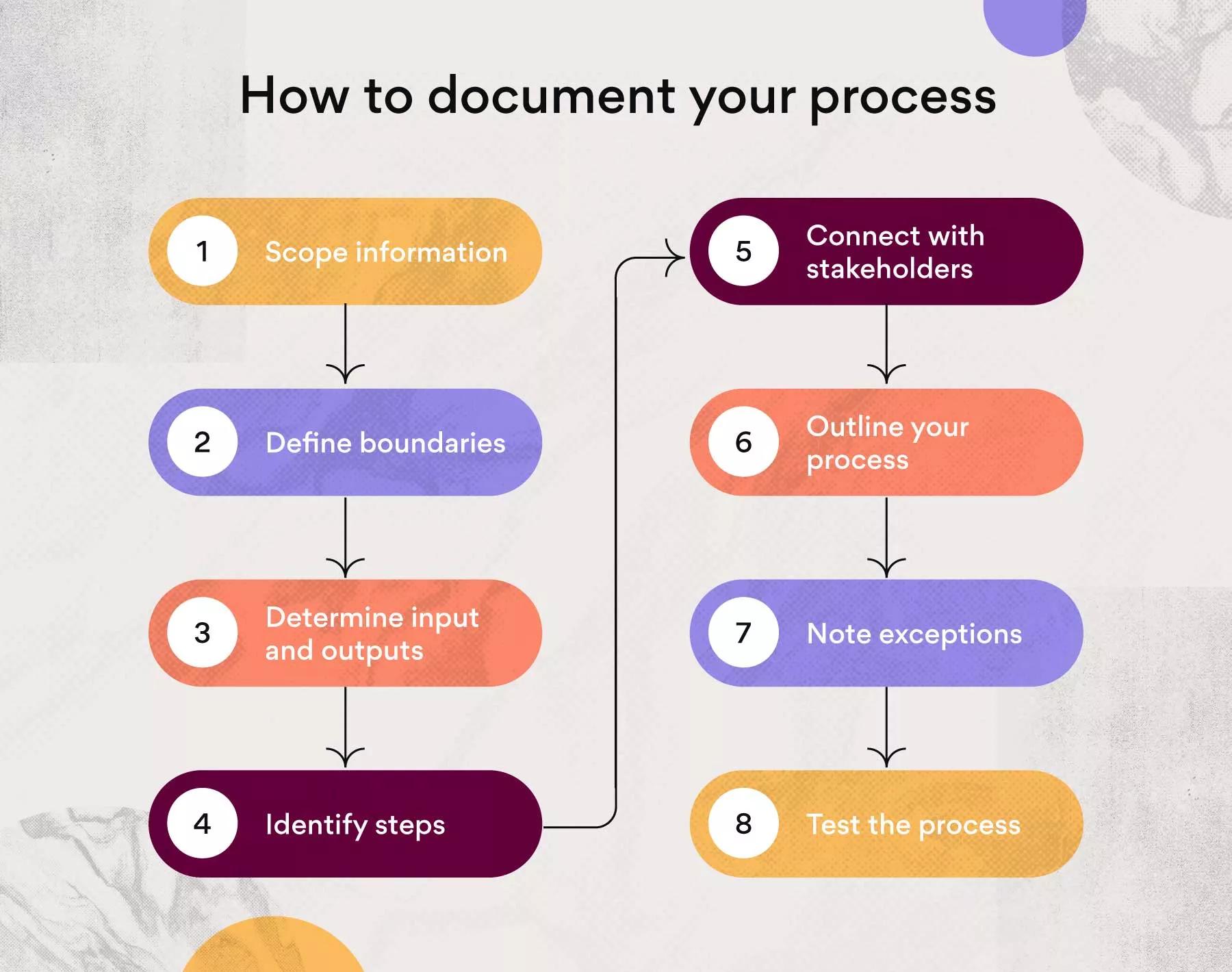
Now explain how the work gets done. Start with one task. Do not create a 100-page operations manual before delegating anything. Choose the process you explain repeatedly and document that first.
Write down:
- The trigger
- The steps
- The tools
- The expected result
- Common problems
- What to do when something goes wrong
The goal is not perfect documentation.
The goal is enough clarity that another person can follow the process without constantly asking you what to do next.
Step 3: Explain the Decision Rules
This is where many delegation attempts fail. The person may understand the steps but still not know what they are allowed to decide. Tell them:
- What they can approve
- What they can change
- What they should never change
- When they should ask for help
- What requires escalation
For example, “Handle customer complaints” is vague.
“Resolve complaints up to $200 without approval. Escalate legal threats or serious safety issues” is actionable.
Step 4: Give Authority
Responsibility without authority creates frustration. If someone owns customer service but needs your approval for every refund, they do not actually own customer service. Give people enough authority to perform the role you assigned.
Step 5: Train Through Practice
Do not assume that sending an SOP means someone is trained.
Use a simple sequence: Show → Practice → Review
First, show them how the task works. Next, let them perform it. Then review the result and correct what needs to change.
Once they demonstrate consistency, reduce your involvement.
Step 6: Create a Review Rhythm
Delegation does not mean disappearing immediately. In the beginning, establish a review rhythm. That might mean checking the work daily for the first week, then twice a week, then weekly, depending on the task.
The important thing is to avoid hovering over every action.
“Delegation does not mean disappearing immediately.”
Delegation vs. Automation: Which Should Come First?
Delegation and automation are not the same thing. The easiest way to decide is to ask:
Does this require human judgment?
If the answer is no, automation may be appropriate.
If the answer is yes, delegation may be the better option.
If it requires founder-level judgment, keep it or systemize it first.
For example:
| Type of Work | Best First Step |
|---|---|
| Routine reminder emails | Automate |
| Customer complaint resolution | Delegate |
| New hire onboarding | Systemize, then delegate |
| Strategic partnership decision | Founder keeps |
| Weekly data collection | Automate |
| Content approval | Delegate with clear standards |
| Repetitive data entry | Automate |
This is why buying more tools does not automatically create efficiency. If the underlying process is unclear, automation simply moves the confusion into another system.
Systems before tools.
Build the process. Define the standard. Decide who owns it. Then determine whether technology can make it faster.
FAQ
What should a founder delegate first?
Start with repeatable tasks that do not require unique founder judgment.
Good candidates include customer follow-up, scheduling, reporting, routine operations, standard sales activities, and administrative work. Prioritize tasks you perform frequently because transferring those tasks creates the biggest time savings.
Before delegating, make sure you can explain the outcome, define the standard, and give the person enough authority to complete the work.
How do you delegate without losing control?
Do not try to maintain control by doing the work yourself.
Instead, maintain visibility through clear standards, decision rules, reporting, and review checkpoints. Your team owns execution while you remain responsible for the bigger standard and outcome.
This allows you to stay informed without becoming involved in every small decision.
How do I know what tasks I should delegate?
Use the five-category framework: Keep → Delegate → Systemize → Automate → Eliminate.
Ask whether the task genuinely requires your judgment, whether someone else can learn it, whether it needs a repeatable process, whether technology can handle it, or whether it should disappear altogether.
This gives you a practical way to decide instead of delegating based only on how busy you feel.
Why does delegation fail?
Delegation usually fails when the outcome is unclear, the process is undocumented, the person lacks authority, training is incomplete, or the founder keeps changing expectations.
It can also fail when founders take the task back after the first mistake.
Before concluding that someone “cannot handle it,” check whether you actually gave them the system required to succeed.
How do I delegate when I don't trust my team?
Start with a low-risk, repeatable task rather than something business-critical.
Document the process, define what good looks like, set clear decision boundaries, and create a review rhythm. Trust can then grow from demonstrated capability instead of blind confidence.
If someone repeatedly fails even after receiving clear expectations, training, and support, then you can evaluate whether the person is the right fit.
The Goal Is Not to Give Away Work. It Is to Build Ownership.
Learning how to delegate as a founder is not about getting rid of tasks because you are tired. It is about changing how your business operates. When knowledge is documented, ownership is clear, and people have the authority to act, the business can move without waiting for the founder.
And if you are not sure where to start, that is exactly what a dependency audit is for.
Find out what only you can do, what should be delegated, what should be systemized, and what should be automated with Kim Vu Journey and build the business system with clarity and efficiency.